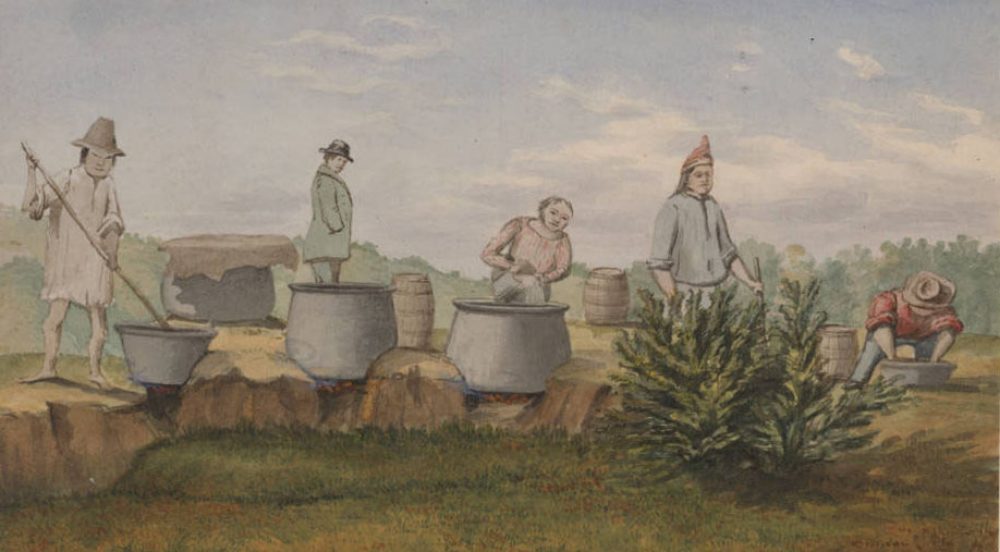
March to May:
Rodeos for separating cattle
Rodeos to brand cattle
June to September:
Rodeos for separating cattle
Cattle and horse herd training
July to November:
Matanza
November to March:
Starting work horses
RODEOS
Vaqueros spent much of their time in rodeos, or roundups. The several types had different functions. There were four general types:
RODEO FOR SEPARATING CATTLE
RODEO FOR BRANDING
RODEO FOR MATANZA
RODEO FOR TAMING HERD
Each rodeo consisted of gathering cattle from where they were grazing, spread out over as many as 44,000 acres.
A mission’s or rancho’s whole herd was not gathered at one time. This took several days to several months, depending on what was to be done with the cattle. Perhaps 250 to 1,000 could be gathered for one rodeo day.
Ranchos would have had one or two permanent rodeo grounds, depending on how large the rancho and how many cattle they had. The missions would have rounded up to temporary rodeo grounds all over their grazing land.
VAQUERO JOBS DURING RODEOS
Volteadores were two men who knew the land and where cattle liked to graze. They directed the gather. The scheme was to encircle a huge area with men on horseback, who would gradually close in on cattle and drive them to one spot. The volteadores rode at the two ends of the line of aventadores. They gave instructions to draw in the line as they gathered.
Aventadores: Many vaqueros were needed to ride a few hundred yards apart in a long half circle for the gather. They rode “into the wind;” cattle graze into wind, so they pushed them in the direction they would naturally go. Their presence on horseback was usually enough to push the cattle forward. Unruly strays would be chased and driven back to the herd.
Reparadores: Old men and boys waited on horseback in the line where the cattle were being driven to. They were responsible for keeping the cattle on the rodeo ground as they were gathered.
If the cattle were held overnight, they were night herded, that is, vaqueros would ride around the periphery of the herd, which would have bedded down together.
Rodeo for separation
When cattle are not fenced in, they roam, often onto other people’s land. Each rancho needed to return cattle that was not theirs. These practices were governed by ancient Spanish laws carried over to Mexico, called the Mesta.
-By Mesta law, they must be held several times a year.
-By Mesta law, neighboring ranchos must be told of the time and date.
-The ‘cattle official,’ the juez de campo, must attend to settle disputes.
Two events occur: the round up proper and the separation activities.
It is likely that the gather is done early, with many cattle on the rodeo ground as other rancho people arrive.
Each rancho coming to collect its own cattle set up a parada a hundred yards from the gathered herd. Two vaqueros kept about10 cabestros on the parada. Cabestros were oxen specially trained for dealing with herding. They would come to call, lie down where the oxen handler wanted, and serve to drag unruly cows tied to their horns, to the rodeo ground. In this instance, they served as a herd that separated cows could spot and run to.
Pairs of vaqueros on horseback, called apartadores, would spot a cow with their rancho’s brand, and quietly enter the herd. They would set their horses one to each side of the cow, and slowly push it to the side of the herd where their parada was.
When out of the herd, the vaqueros would yell “hora” at the cow, startling it. it would run for the nearest herd it saw, which was the cabestros at the parada.
Vaqueros on the parada would “tail” any runaways. To tail, they would ride up beside it, and yank the tail over its head, while the horse sped up, so it was tossed onto the ground. Called colear in California, it is still done at charrerias in Mexico.
Orejanos, or unbranded calves not following a cow, became the property of the rancho on whose land it was found. Calves still following a cow went with the cow home to be branded.
These were the fun fiesta rodeos, with horse races, rope tricks, and competitions afterwards.
Rodeo for branding
By Mesta law, cattle were branded once a year, by May.
After the gather:
Half the vaqueros stayed on their horses and kept the herd bunched and quiet.
The best herd ropers rode into the herd and roped the unbranded calves and dragged them to the work area.
Tumbadores on the ground grabbed the calves and threw them to the ground on their right side, tied their feet together, and released the herd roper’s rope.
The marcador used a hot branding iron to mark the left side of the rear haunch of the calf. One iron might stay hot enough to brand 3 or 4.
The atolero swabbed the burn with a soothing paste that also protected it from flies.
The capador castrated the males, and cut ear marks in all calves. He kept the ear pieces to count how many were done that day.
A man took care of the fire and keeping branding irons hot and available.
Cattle on the rodeo ground were not fed or watered, thus, they could only be made to stay there for a day or two.
Perhaps between 8 to 30 calves could be processed by a marcador, per hour, if all others kept him supplied. In a 10 hour day, perhaps 300 at most could be processed. To bring in that many calves, at least 300 to 600 adults would be rounded up with them. About 2500 is the top number of cattle that can be kept or driven in one herd. The rodeos probably brought in many fewer than that, each time. With 2,000 head on a small rancho, and 60,000 on a mission, the branding could take months.
Rodeo for matanza
The matanza ground was chosen for access to water, wood, enough open space to stretch hides to dry, and access to transportation such as ships. The matanza ground was distinct from the rodeo ground.
WHD (William Heath Davis) says 50 head were brought at one time to a corral. The mayordomo, on horseback, would point to the steers to be roped, and a herd roper would rope and drag them.
Vaqueros on the ground slaughtered in pairs, also doing the skinning. Indians on contract did the rendering of the tallow and any drying of meat.
WHD says the matanza season started in late July and went to October.
Rodeos for taming the herd
Vaqueros trained cattle herds to come to the rodeo ground when they were called.
WHD says they were driven in two or three times a week, then less often. Once trained, vaqueros only needed to ride out and call them, and they would come to the rodeo ground. Cows could bear as many as 20 calves in their lifetime, so it was well worth it to train them.
Darwin was told by gauchos in Uruguay that cattle organize themselves into tropillas, groups of from 40 to 100. If the tropillas are all herded together, cows will find their way back to their own tropilla in a day or two. It is likely that California vaqueros knew this, too.
HORSES
Only male horses were used for riding.
Riding horses were herded into caponeras, of about 25 head, which stayed together. Each had a yegua pinta, or pinto mare, as a leader.
WHD says on a rancho of 8000 head of cattle, there would be 12 caponeras, or about 300 head of saddle horses.
The Peraltas, and probably others, herded caponeras by color. WHD saw caponeras of all palpminos, blacks, and roans, three of the rarest hide colors.
Female horses were herded into manadas, of about 25 mares. Each had one stallion.
A new manada was herded during the day, and corralled at night, until they kept together on their own.
A remuda was the specific term given to a group of work horses assigned to a vaquero or brought for vaqueros’ use. Each vaquero had about 10 horses assigned to him. If he was lucky, some had good night vision and were good at night herding; some were short, stocky and strong, for roping; some were tall and fast, for going after strays, and some were like today’s cutting horses, which can tell which way a cow will go and control it.
A caballada is a drove of horses; more likely a military term than a cattlemen’s.
Other vaquero responsibilities
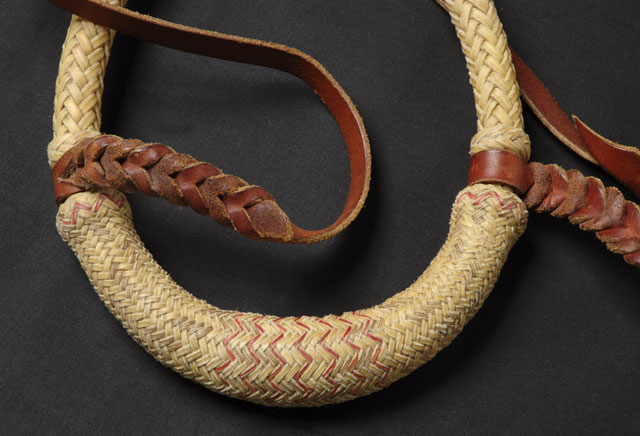
Vaqueros made their own reatas. These were usually a six strand round braid of rawhide. They were measured in brasadas, by measuring a length between a man’s hands stretched as far apart as possible. Many reatas were 30 brasadas, or about 80 feet long.
Vaqueros taught themselves to rope and ride. They were peerless at both.
Vaqueros in the San Joaquin spent the winter months breaking horses. They might saddle and ride a horse 12 times, then let it go until spring.
The quality of training varied. To “finish” a horse takes 7 years. “Finishing” means they understand and respond immediately to every signal and request the rider makes. Less trained, ordinary horses respond 30% of the time to signals, requiring repetition by the rider to obtain the desired action.
The yearly event “Extreme Mustang Makeover” (on video) shows that horses can become well trained in 100 days.
Also good to know
Sheep are seasonal breeders, which means they come into estrus in the fall when the days are becoming shorter. In the spring, all the sheep will be born within a month to six weeks.
Cattle are not seasonal breeders: they come into estrus all during the year, except when they are in milk. Thus, their calves, at branding time in the spring, will be any age from a few days to 12 months old.
Modern day cattle raisers control when the bull is put in with cows, or artificially inseminated, to ensure calves are born at the time of year they want. Californios did not do this. They kept about 1 bull per 25 cows, year round.
Steers, or castrated males, were not slaughtered until about 3 years of age or older. Cows were kept for breeding. A criollo cow could birth 22 calves in her life.
Dr. Brenda, a veterinarian on the TV show “The Incredible Dr. Pol,” said that horses are seasonal breeders. They come into estrus in the spring if they have no foal, or a couple weeks after they have given birth. As their gestation is nearly a year long, this means the foals are born at the best time of year for abundant pasture.
The Criollo Breed
Three Andalusian Spanish cattle breeds were brought with Columbus and then Cortez to Mexico. Several hundred years later, criollo cattle came from Baja missions and Tubac to the California missions. They were exceptionally well suited to open range ranching. One contemporary criollo breeder says “they never get sick. I have never had to pull a calf. They have tight feet for the rocks. They finish on pasture.”
In the tv series “The Incredible Dr. Pol,” one sees each week why this is wonderful and unusual. Northern European breeds, like Angus and Hereford, as well as dairy breeds like Jersey and Holstein, would often die without veterinary care. They get: digestive system problems like ketosis, acidosis, and displaced abomasum; birth problems such as too large a calf and breech birth, demanding the vet “pull the calf” to assist in delivery; and foot problems, making them too lame to sustain themselves.
Finishing on pasture means no purchased feed is needed to bring the calf up to slaughter weight.
The contemporary breed closest to what was brought to California is the Raramuri criollo. On the La Jornada Experimental Station, these are being compared to Herefords and Angus by the government, to determine which is the best desert breed. California Corriente cattle are close, as are Texas longhorms, but California criollo did not have long horns.
Abel Stearns said his cattle weighed in at 600 to 800 pounds. Contemporary cattle are deemed fit for slaughter at 1000 to 1400 pounds. By today’s standards, California criollo would be regarded as small.
References
Life on the King Ranch by Frank Goodwyn . Descriptions of jobs and processing cattle came from this book. The King Ranch owners imported virtually a whole Mexican town to initially supply workers. They taught the gringos the industry.
Severnty Years in California by William Heath Davis. Descriptions of rodeos and their different functions came from WHD.


 Alta California Cattle