Review of Vaqueros, Cowboys, and Buckaroos, by Lawrence Clayton, Jim Hoy, and Gerald Underwood. University of Texas Press: Austin, 2001.
I wish the publishers of Western history books would find readers of the final draft. Surely someone at the Autry could have pointed out that the “vaquero” section was curiously lacking, or just plain wrong, in the areas of equipment and dress. The mochilla style saddle is not shown or mentioned, nor are garrochas, or desjarretaderras, (media lunas): and the Autry has examples of all of those. The stirrup described is a later development, and braided rawhide riendas not shown.
The historical content, thus, becomes highly suspect. Much of this sounds like it has been written backwards: that is, the author works back in time from what he knows of Texas. Most cattle industry historians do this, to some extent, instead of attempting to find original documents from the period, or historians working in allied areas. Clayton has never found Bishko, Sluyter, or, (huge sin) Rouse.
So, he says Texas longhorns were a crossbreed including “ganado prieto,” the fighting bull. Rouse’s description of the importation and segregation of the de Lidia fighting bulls makes this extremely unlikely. Plus, the origin of the longhorn as a “land race,” detailed in Rouse, is not covered. Herding practices are not covered. Spanish laws governing cattle are not covered. I believe these are fairly well documented and findable.
What is not yet documented well, as far as I can tell, is also not covered here. I would give my eye teeth for a book that:
–covers early peninsular (Spanish) cattle practices in more than anecdotal fashion;
–covers the development of estancias in New Spain;
–finds more “saddle proof” of Sluyter’s theory that the saddle horn was developed early, in Vera Cruz;
–finds written records of how many vaqueros were trained and used on missions and ranchos;
–finds records of what the Padres had available to them as instruction in the care of cattle on the missions;
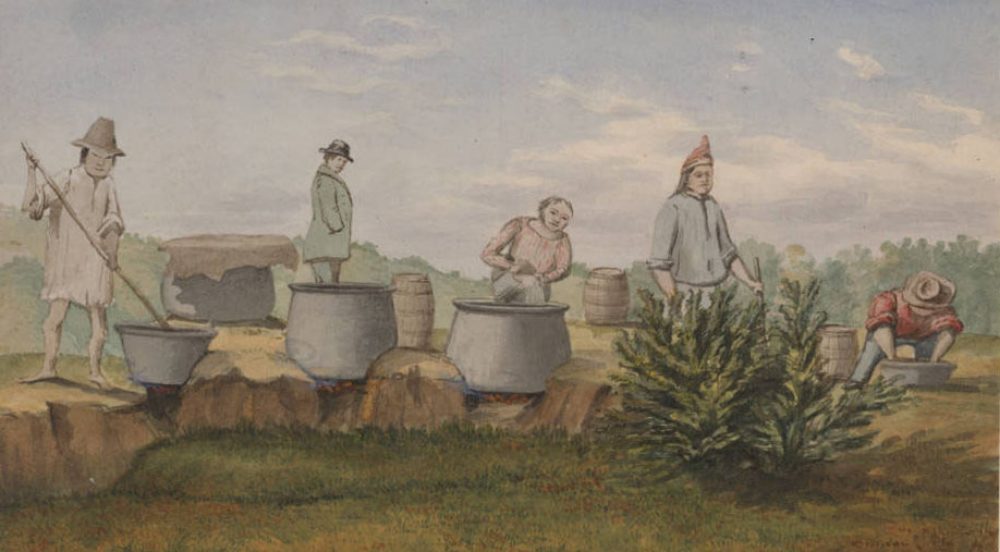
–finds a first person account of a matanza, including output, daily slaughter, and how and who staked out 100 hides at a time. Sluyter has a description of a slaughterhouse for making tasajo in South America, which is detailed enough to draw a picture and set a timetable. We have no such description for Nueva Espana or Alta California.
After all, the story is not a bunch of guys riding around on horses. It’s an industry harvesting and selling a line of products.
 Alta California Cattle
There is really no “Peninsular” cattle practices as the Spanish did not invent the way they handle cattle. The way they do is is a combination of many techniques of Asian, European and African Origin. Of course these techniques very different from the way the Latinos handle cattle. We can actually argue, that “Spanish” techniques were useless in Latin America as the cattle business was extremely different among other reasons.
If you want a book about the development of estancias in Mexico, read “Land and Society in Colonial Mexico: The great Hacienda” by François Chevalier.
Great blog by the way!
Saul.
LikeLike